
Mark Verheijen
Associate Professor
Our research aims to discover new glial-based mechanisms of information processing in the brain in health and disease, with a focus on the role of astrocytes in the regulation of synaptic plasticity.
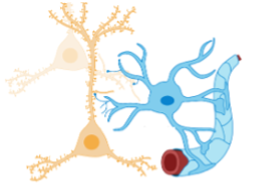 Research Focus
Glial cells have traditionally been viewed as passive support for neuronal functions; however, research over the last two decades suggests they play a far more active role. Our research aims to better understand the role of glial cells in regulating neuronal plasticity in both health and disease. To this end, we focus on the role of glia in synapse function, utilizing both in vitro (e.g., neuron-glial cell co-cultures) and in vivo (e.g., molecular analysis and genetic manipulation of astrocytes) experimental models.
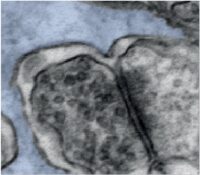 Research Line: Astrocyte-Synapse Interactions in Learning and Memory
In recent years, an intriguing model of the synapse has emerged in which astrocytes and neuronal synaptic elements function as active partners in modulating synaptic transmission. This “tripartite synapse” view promises to advance our understanding of the molecular and cellular processes underlying memory. We contribute to this field by addressing the role of perisynaptic astrocyte molecules in learning and memory. Our approach integrates expertise in ultrastructural imaging (EM, confocal microscopy), molecular analysis (transcriptomics, proteomics), and in vivo manipulations (transgenic mice, viral targeting) of glial cells.
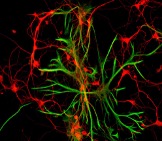
Research Line: Neuron-Glia Interactions in Brain Diseases
Beyond studying fundamental processes, we seek to translate our findings into treatments for human brain disorders by investigating “dysfunctional neuron-glia interactions” in preclinical models, such as Alzheimer’s Disease. We perform molecular studies on disease mechanisms with the goal of targeting these pathways using genetic and pharmacological approaches in both human cell cultures and mouse models.
Key publications
Badia-Soteras A, Mak A, Blok TM, Boers-Escuder C, van den Oever MC, Min R, Smit AB, Verheijen MHG. Astrocyte-Synapse Structural Plasticity in Neurodegenerative and Neuropsychiatric Diseases. Biol Psychiatry. 2025 Apr 18:S0006-3223(25)01125-4
Kotah JM, Kater MSJ, Brosens N, Lesuis SL, Tandari R, Blok TM, Marchetto L, Yusaf E, Koopmans FTW, Smit AB, Lucassen PJ, Krugers HJ, Verheijen MHG, Korosi A. Early-life stress and amyloidosis in mice share pathogenic pathways involving synaptic mitochondria and lipid metabolism. Alzheimers Dement. 2023 Dec 6. doi: 10.1002/alz.13569
Badia-Soteras A, Tim S. Heistek, Mandy S.J. Kater, Aline Mak, Adrian Negrean, Michel C. van den Oever, Huibert D. Mansvelder, Baljit S. Khakh, Rogier Min, August B. Smit, Mark H.G. Verheijen. Retraction of astrocyte leaflets from the synapse enhances fear memory. Biological Psychiatry (2022) https://doi.org/10.1016/j.biopsych.2022.10.013
Kater MSJ, Huffels CFM, Oshima T, Renckens NS, Middeldorp J, Boddeke EWGM, Smit AB, Eggen BJL, Hol EM, Verheijen MHG. Prevention of microgliosis halts early memory loss in a mouse model of Alzheimer’s disease. Brain Behav Immun. 2022 Oct 18;107:225-241.
Sapkota D, Kater MSJ, Sakers K, Nygaard KR, Liu Y, Koester SK, Fass SB, Lake AM, Khazanchi R, Khankan RR, Krawczyk MC, Smit AB, Maloney SE, Verheijen MHG, Zhang Y, Dougherty JD. Activity-dependent translation dynamically alters the proteome of the perisynaptic astrocyte process. Cell Rep. 2022 Oct 18;41(3):111474. doi: 10.1016/j.celrep.2022.111474.
Goudriaan A, Loos M, Spijker S, Smit AB, Verheijen MHG. Genetic Variation in CNS Myelination and Functional Brain Connectivity in Recombinant Inbred Mice. Cells. 2020 Sep 18;9(9):2119.
Camargo N, Goudriaan A, van Deijk AF, Otte WM, Brouwers JF, Lodder H, Gutmann DH, Nave KA, Dijkhuizen RM, Mansvelder HD, Chrast R, Smit AB, Verheijen MHG. Oligodendroglial myelination requires astrocyte-derived lipids. PLoS Biol. 2017; 26;15(5):e1002605
van Deijk AF, Camargo N, Timmerman J, Heistek T, Brouwers JF, Mogavero F, Mansvelder HD, Smit AB, Verheijen MH. 2017. Astrocyte lipid metabolism is critical for synapse development and function in vivo. Glia. 2017; 65(4):670-682